If there’s a planet in astrology that can be linked with the concept of the shadow in Carl Gustav Jung’s work, it is Pluto.
Analyzing your shadow while Pluto is retrograde is an appropriate way to connect with this energy.
Without further ado, this is what you’ll read about today:
- Pluto in Astrology
- The Differences Between Sigmund Freud and Carl Gustav Jung
- The Shadow in Carl Gustav Jung’s Work
- Why Analyze the Shadow When Pluto Is Retrograde?
- Exercise to Analyze Your Shadow
Let’s go.
Pluto in Astrology
In his book Cosmos and Psyche: Intimations of a New World View, Richard Tarnas mentions symbolic meanings attributed to Pluto.
Pluto is the god of the underworld in Roman mythology. And this name fits the planet like a glove.
The symbolic characteristics of Pluto also resemble those of the Greek god Hades. The myth of Persephone and Hades is very representative of Pluto’s qualities.
The archetype associated with the planet Pluto also encompasses many significant deities beyond those already mentioned.
Pluto is associated with myths of descent and transformation, as well as deities of destruction, regeneration, death, and rebirth.
Pluto represents the underworld and the underground in all senses, including geological, instinctual, social, sexual, criminal, and mythological contexts.
Related: Pluto in Aquarius and Tips for Saturn in Aquarius
The terrifying reality that lurks beneath the surface, like beneath societal conventions, belongs to Pluto’s realm. When that reality is unleashed with destructive and transformative force, Pluto is behind those actions.
Tarnas suggests Pluto can be associated with Sigmund Freud’s concept of the primordial id, commonly called the unconscious. I agree with this postulate. I would also add that it can be connected to the concept of the shadow in Carl Gustav Jung’s work.
The Differences Between Sigmund Freud and Carl Gustav Jung
Carl Gustav Jung was experiencing his first Saturn return when he met Sigmund Freud.
Freud saw the younger Jung as the heir he had been seeking to take forward the “new science” of psychoanalysis.
However, their collaboration only lasted for six years, from 1907 to 1912. It ended when Freud was experiencing his second Saturn return.
Their relationship is complex, and the reasons for their split are multifaceted. I recommend reading their correspondence and other sources on this subject, as I’m providing only a summary here.
Essentially, Freud and Jung parted ways due to their differing views on the unconscious.
Jung viewed Freud’s theory of the unconscious as incomplete, overly negative, and rigid.
According to Freud, the shadow primarily represented repressed and unacceptable desires, particularly those related to sexuality. In Freud’s view, the shadow originates from the unconscious.
According to Jung, the shadow is a more encompassing entity. It includes repressed desires, as well as aspects of the self that are deemed unacceptable. But its contents are not exclusively sexual, and it includes both positive and negative aspects of the self.
Jung’s observations overlap to an extent with Freud’s model of the unconscious. What Jung called the “personal unconscious” was just “the unconscious” in Freud’s work.
Jung suggested a second, overarching form of the unconscious beyond the personal. That is the collective unconscious. It’s a metaphorical space that embodies the alleged presence of specific archetypes across space and time.
In his book Memories, Dreams, Reflections, Jung recalls an exchange he had with Freud in 1910. This exchange took place a couple of years before their intellectual split. This is what Jung conveys:
I can still recall vividly how Freud said to me, “My dear Jung, promise me never to abandon the sexual theory. That is the most essential thing of all. You see, we must make a dogma of it, an unshakable bulwark.” He said that to me with great emotion, the tone of a father saying, “And promise me this one thing, my dear son: that you will go to church every Sunday.” In some astonishment I asked him, “A bulwark–against what?” which he replied, “Against the black tide of mud”—and here hesitated for a moment, then added—“Of occultism.”
Jung expresses that the words “bulwark” and “dogma” were alarming to him. According to Jung, a dogma is “an undisputable confession of faith.” This confession of faith is “set up only when the aim is to suppress doubts once and for all”. This alarmed him because dogma has nothing to do with scientific judgment.
Freud wanted to mask his intentions of focusing on the “sexual theory” as a scientific decision. But in reality it was, in Jung’s words, “a personal power drive.”
Jung knew that he was incapable of accepting this dogmatic attitude. Furthermore, what Freud regarded as “occultism” included philosophy, religion, and parapsychology. Jung was open to them because they offered different perspectives on the psyche that were worth exploring.

This is what Jung writes about the sexual theory:
To me the sexual theory was just as occult, that is to say, just as unproven a hypothesis, as many other speculative views. As I saw it, a scientific truth was a hypothesis which might be adequate for the moment but was not to be preserved as an article of faith for all time.
Freud, who wasn’t religious, constructed another dogma. In Jung’s words, Freud substituted the “jealous God whom he had lost” for “another compelling image, that of sexuality.”
And Freud committed the same sins (pun intended) that he was trying to debunk because the sexual theory “was no less insistent, exacting, domineering, threatening, and morally ambivalent than the original one,” the original one being religious dogma.
Freud’s excuse was that the sexual theory was “scientifically irreproachable and free from all religious taint.” However, psychoanalysis in some circles is so dogmatic that it is no different than an organized religion.
The intellectual split left Jung ostracized, while Freud received all the accolades. In recent years, however, the tides are changing.
The Shadow in Carl Gustav Jung’s Work
I recently listened to the podcast episode of This Jungian Life titled “Unlocking the Power of Your Shadow.”
In this episode, the guest was Connie Zweig. She’s a Jungian analyst who wrote Meeting the Shadow: The Hidden Power of the Dark Side of Human Nature.
The shadow is an unconscious aspect of the self, characterized by features and attitudes that consciousness doesn’t recognize as acceptable.
Zweig’s mentions that the psyche is built in a way to consciously attribute to other people what is unacceptable in ourselves, what we dislike, what is taboo, what is unwelcome, what is even horrific to us.
The aspects of ourselves that we don’t perceive as acceptable can include feelings, habits, or beliefs, among other possibilities. The psyche defends itself against that by attributing it to another person or group. For example, by saying “THEY are lazy, I’m not lazy.”
Some people joke and say, “If you want to know what your shadow is, ask your spouse.”
Another option is to think of someone who really rubs you the wrong way. Then, distill the characteristics of that person. What attitudes that you criticize in them are actually parts of yourself that you haven’t acknowledged? Congratulations! You have discovered one facet of your shadow.
Jung says that dealing with the shadow is a moral problem. It’s no easy task. Are you willing to go there? Are you willing to confront the areas of yourself that you despise? Are you willing to deepen your awareness, hold the paradox, and not act out that part of the shadow?
Your shadow could be the darkest of characters. Can you integrate it into your consciousness without harming yourself or others in the process? That’s the moral problem Jung is referring to.
Shadow work is a social responsibility. You can do shadow work, reclaim your projections, and then your political work will be fueled by something different.
Related: My Philosophy About Astrology
If you want to learn how to start working with your shadow, keep reading. I offer some prompts that work in that direction.
Why Analyze the Shadow When Pluto Is Retrograde?
Pluto spends 44 % of its cycle in retrograde motion. It’s the planet that retrogrades the most.
So why work the shadow when this planet is retrograde since it isn’t a special event?
I reply to your question with another question: Why not?
Pluto retrograde periods are not particularly memorable (unless the transit is in contact with a natal planet of yours). Hoewever, I like this pause of sorts to reflect upon the shadow.
Related: Astrology Basics: Your Birth Chart States of Consciousness
The work on the shadow will not be constant or excruciating. I invite you to engage with the prompts I’ll offer and do them at the beginning of the retrogradation. Then, you can check them out again when a situation in your life triggers you to reflect on your shadow.
Don’t worry if no revelations about the shadow arrive when Pluto is retrograde. This is a lifelong journey.
Exercise to Analyze Your Shadow
Before we dive into the prompts, I have a disclaimer: I’m not a Jungian analyst nor a professional in mental health. This is just a journaling exercise. It doesn’t replace professional help. Please reach out to trusted professionals if you’re struggling.
Understood? Let’s go.
You will create a fictional character that embodies aspects of yourself you find distasteful.
Focus on an addiction, habit, belief, or whatever you can think about that you don’t like about yourself.
The aspect of yourself that you choose is something you struggle with, which may cause shame or suffering, but you don’t know how to change in your life.
Focus on something that has been present in your life for many years and hasn’t lost its grip or power over your conscious self.
Have you identified it already? Good.
Write it down under this title: The Shadow Part of Myself That I Choose Today
You can name this part of your shadow. Avoid choosing the name of your parents, spouse, or close relationship. You can choose a metaphoric name.
Then, you’re going to answer some questions to create a character based on that part of yourself that you don’t like.
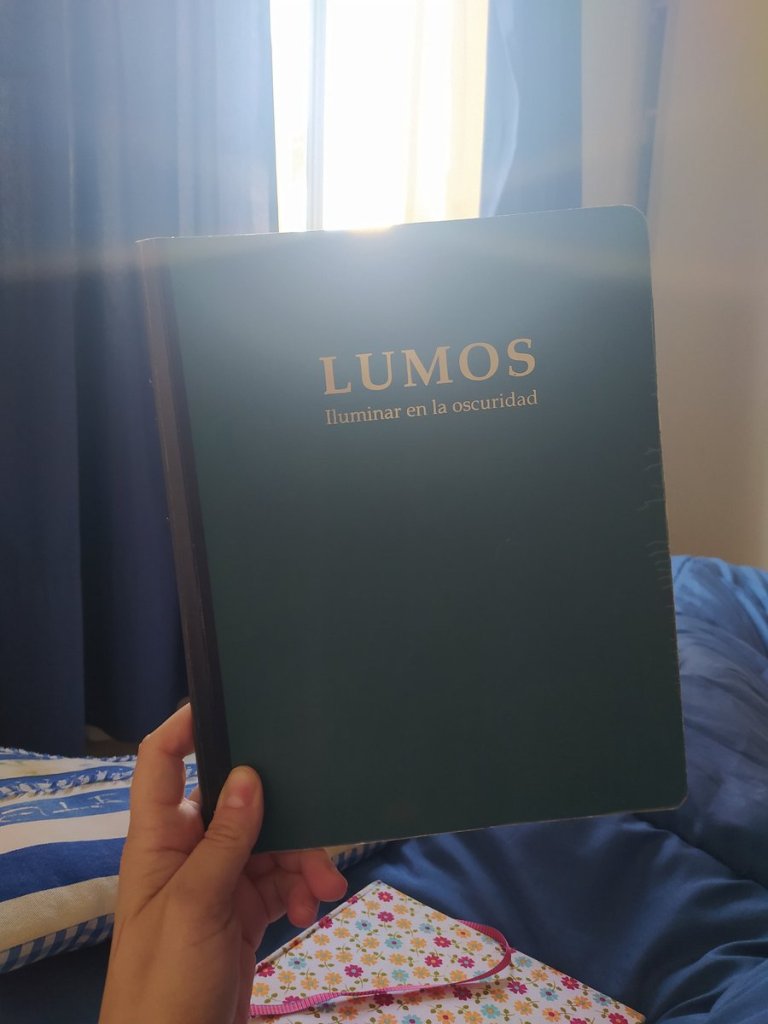
Rewrite these questions in your designated journal and answer them with the first information that comes to mind:
- Core wound or fear: What deep fear or insecurity drives this character? This often stems from unmet childhood needs, feelings of shame, or experiences of rejection.
- Desire or secret motive: What does the character secretly long for, even if it’s taboo or irrational? This reveals hidden motivations.
- Appearance and mannerisms: How do they look, dress, speak, or move?
- Voice and tone: What does their voice sound like? Describe their voice and if they use irony, humor, or jokes when they speak.
- Backstory: What past experiences shaped them? This helps you understand how your shadow was formed and what it’s protecting.
- Flaws and destructive patterns: What self-sabotaging behaviors do they engage in?
- Strengths and gifts: What hidden strengths or raw power do they hold that, if integrated, could become a source of confidence, or vitality?
- Character arc or evolution: If this shadow character were to evolve, what would integration look like? How might they transform into an ally rather than a self-sabotaging entity?
- Emotional triggers: What situations or people “activate” this character? When do they show up most forcefully?
- Symbol or object: Is there an object, image, or symbol associated with this character? It could be a cigarette, a lipstick, a belt, etc.. This symbol or object can anchor their presence in your imagination.
- Habitat or environment: Where does this character live? It could be a decaying mansion, a spotless apartment, an art studio, etc.
- Dialogue or catchphrase: What’s something they would say often? Examples: “What’s the point?”, “I’m never enough”, “They don’t deserve my kindness.”
- Mirror characters: Which fictional characters, celebrities, or people in your life reflect similar traits to your shadow? Projected shadows often appear in those we admire or despise.
- Relationship to the body: How does this character relate to physicality? Do they overindulge, disconnect, obsess, or punish the body?
Now that you have written everything down, you have brought some unconscious contents to your consciousness. Now you can have a conscious relationship with (part of) your shadow.
By personifying an aspect of your unconscious, you can have a dialogue with this component of yourself through writing, an artistic practice, or another creative endeavor.
The characters generated from the shadow exist to protect you from something. Each character needs validation and to be seen.
Slowly, you have to give this part of yourself that you find distasteful the attention it deserves. If you do it, it will start to lose its charge.
You can interact with your shadow on a weekly basis. For example, you can ask this character what it wants to reveal to you or what they have been up to. Then, write down the information that comes to mind.
Generating this connection with parts of your shadow during Pluto retrograde is an excellent use of this energy.
I hope this text helped you learn about the shadow and how to connect with it during Pluto retrograde periods.
Before you leave, I have an invitation to extend.
May 6th, 2025, marks the solar return of this blog about the First Saturn Return. To celebrate its birthday, I’m giving away three personalized reports about YOUR next solar return. Complete this form to participate.
Good luck! 🍀
And thank you for being here!




 First Saturn Return
Leave a comment